
This story was originally written for Bilingual Reporting under the instruction of Professor Mei-Ling Hopgood at Northwestern University.
By Daisy Villegas & Isabella Soto
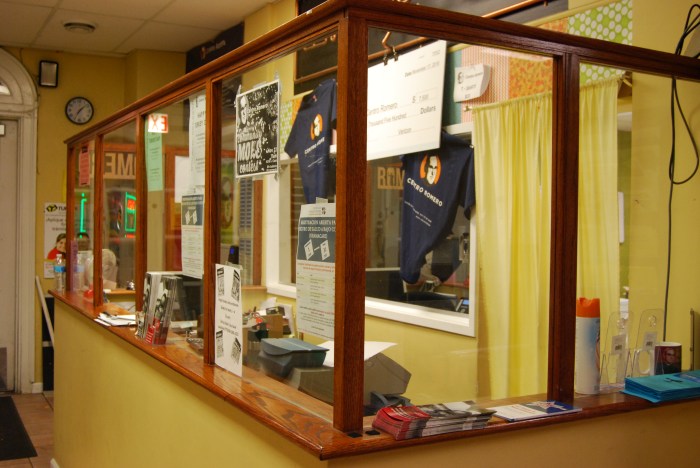
We believe that a person has a right to an education. At Centro Romero, education is not only a given, it is the reason for its existence. Every year, thousands of immigrants and refugees enter its doors to learn English, get a basic adult education, or get their citizenship.
Vienen de todos tipos de vidas, de todos lugares que puedes imaginar. Vienen a Centro Romero para buscar una educación que le dará mejores trabajos y el respeto de la comunidad de habla inglesa en Chicago. Están motivados por expectaciones, esperanzas, y sueños.
Some come to the center to learn English to go to college. Others come to communicate better with their children.
Cualquiera razón, llegan a Centro Romero con la esperanza de un día hablar el idioma que ayudará sus oportunidades de éxito.
ENGLISH
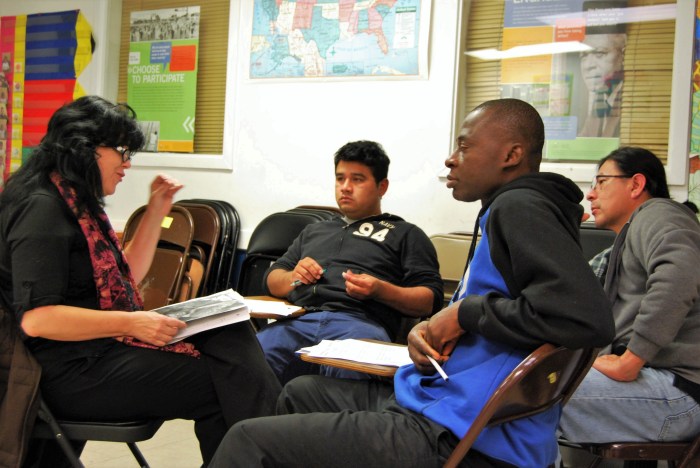
José García sits quietly in a fluorescent lit room, his eyes carefully switching between photographs and words. On his desk is a handout on mood and emotions, and the class works to describe the details in a series of photographs. One photo boasts an advertisement for a perfume, showing a fair-skinned model wearing a gold dress. Another depicts a yellow M&M standing in front of a golden Christmas tree, and the final shows a woman with her two children huddled behind her shoulders. García fiddles with a pencil, nimbly twiddling it between his fingers.
In the ESL classroom of Centro Romero, the walls host maps of Illinois and the United States as well as posters outlining how a bill becomes a law and the branches of government. The rickety wooden desks fill the room with creaky noise as the students shift in their chairs and stumble over words as they struggle with the English language. They may not be new to the classroom or Chicago, but they are new to the language that they hope will get them higher paying jobs and help create a pathway to citizenship.
Centro Romero has long been a source of success for immigrant and refugee families on Chicago’s Northside. Since 1984, the community-based organization has helped many immigrants access English as a Second Language (ESL), General Educational Development (GED), Adult Basic Education (ABE), and citizenship courses. Their mission, promoted on their website, is to “bridge a disenfranchised community of immigrants and refugees into mainstream American society as well as improving their opportunity for upward social mobility.” Recently, however, the services that Centro Romero offers have dwindled and resources for immigrants and refugees are at risk of being cut off.
Centro Romero was named after Archbishop Oscar Arnulfo Romero, who was assassinated at the height of El Salvador’s Civil War, and reflects Romero’s commitment to giving a voice to the voiceless. Centro Romero offers education, advocacy, leadership, and legal service to promote the growth of immigrants and refugees in the community. The center helps about 15,000 people per year according to Dena Giacommetti, the adult education program director. For this reason, Centro Romero never denies people access to their courses.
The community center faces pressure to stay open without state money due to the recent Illinois budget crisis, and as a result Centro Romero has had to deal with layoffs, furloughs and uncertainty about its future. In the last year, Centro Romero has lost 17 teachers but has been able to re-hire the majority of them. Family literacy classes are no longer offered and the center faces an influx of newcomers from other centers that have already closed down. Centro Romero was able to stay open by greatly reducing their services and with the help of numerous volunteers.
“It’s been a disaster. Centro Romero almost shut down last year because of budget cuts. It’s a gift that we’re still here,” said Debbie Kaputska, an adult basic education teacher.

For students like García, the closing of the center would devastate their chances of learning English or completing their GED or citizenship classes. The closing also poses a danger to other immigrants who may not have elsewhere to go to seek legal counseling services. For many, Centro Romero is the first place immigrants and refugees visit for help, making it an indispensable resource to the community.
“Centro Romero is important to me because here I can learn to interact with people from different countries and at the same time I make many friends,” said García. “It’s important because I can also help many people who truly need help.”
According to the Fiscal Policy Center at Voices for Illinois Kids, due to the lack of state funding going to immigrant services, “roughly 102,000 immigrants are no longer receiving services through the New Americans Initiative and the Immigrant Family Resource program”. These two programs provided services such as ESL classes and assistance with naturalization and citizenship processes — resources that Centro Romero offers and have been affected due to the budget cut.
“If it weren’t for fundraisers and community outreach events, the center might not be standing today. We fundraised like crazy,” according to Kaputska.
When adult education programs get the majority of their money from the state, the lack of a state budget is “not good news” for Katie Maranzana, the transitions coordinator at the center. Despite struggling and reducing its services, some centers were not as fortunate as Centro Romero. The Albany Park Community Center was forced to sell its building and shut down classes as a result of the budget cuts. According to Maranzana, this was the largest shutdown of any center to date.
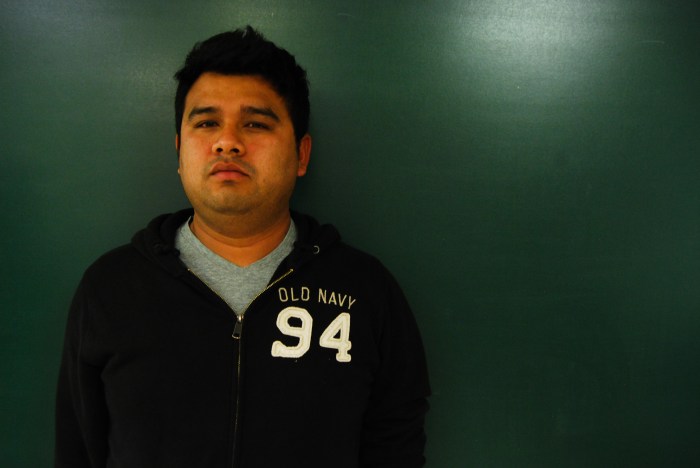
García, a recently naturalized US citizen and an immigrant from the Mexican town of Morelos, is shy and fidgety, his eyes low and his voice quiet as he talks about his life. He has lived in Chicago with his father and two younger sisters since 2011, has a brother who lives in Glenview, and his mother and another brother remain in Morelos. He found out about Centro Romero through his father, who has been living in the United States for over 20 years and who also learned English and became a citizen through Centro Romero’s classes.
“I come here every night so that I can some day be really good at English and go back to college and become an engineer,” said García. “My father learned English here and I will too.”
Many students must balance the realities of immigrant life with their classes at Centro Romero, often coming to class after a long day of working or tending to family. Whether it is to study English in order to get their GED, take citizenship classes, be qualified for a job, or to simply communicate better with family in the United States, each student at Centro Romero has their own story behind their desire to learn English. Despite feeling comfortable speaking Spanish in his home and at his job, a car wash in Glenview, García realizes the barriers that not speaking English creates.
“If you want a better job, you have to learn English and be a citizen,” said García.
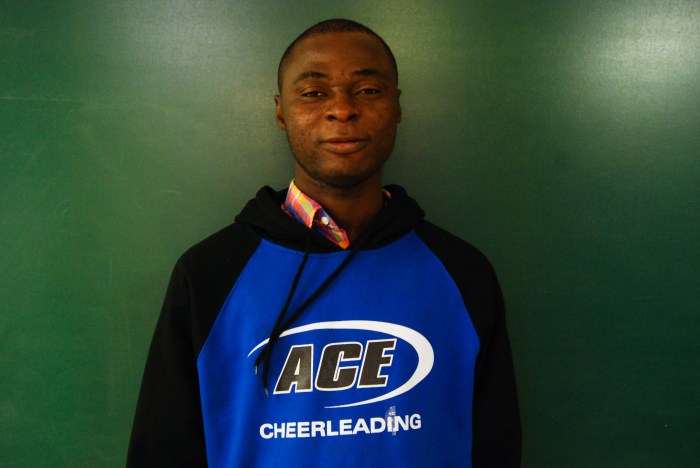
Difficulties aside, Centro Romero’s role in the community remains as important as ever, especially in the aftermath of the continued budget crisis and the 2016 presidential election. Maranzana said that since the election, applications to volunteer have surged. The center, usually receiving around one or two applications per week, has received over 20 applications for volunteers in the weeks following Nov. 8. Maranzana also shared that when asked why they would like to volunteer at the center, one applicant simply wrote “to put it simply, the election and Donald Trump.”
Like Garcia, many students look to Centro Romero as a place where their hopes of speaking English will become reality. But this reality is not at all what it may seem to be. Staff at Centro Romero have expressed concern about the future of the center.
For Joseph Martens, a resource developer at the center, the future of Centro Romero lies in the hands of Donald Trump.
“We’re not sure what will happen now that Trump is in office,” said Martens. “Because he’s still the president-elect, nothing has happened. This may not be the case come January. We’re going to have to wait and see.”
SPANISH
José García está sentado callado en un cuarto con luces fluorescentes, sus ojos cuidadosamente alternando entre fotos y palabras. En su escritorio esta un papel sobre emociones y humores, la clase trabaja para describir los detalles en una serie de fotos. Una foto muestra un anuncio para un perfume con una mujer de piel clara con un vestido dorado. Otra ilustra un chocolate M&M amarillo parado en frente de un árbol de Navidad dorado, y la foto final enseña una mujer con sus dos hijos encorvados atrás de ella. García está jugueteando con un lápiz, pasándolo por sus dedos ágilmente.
En el salón de la clase en Centro Romero, las paredes muestran mapas de Illinois y los Estados Unidos y también carteles delineando cómo las propuestas de ley se convierten en leyes y las ramas del gobierno. Los escritorios ruidosos de madera llenan el cuarto con sonido porque los estudiantes se mueven en sus asientos, tropezando sobre palabras en sus esfuerzos para adquirir el ingles. Aunque no son nuevos al salón o a Chicago, son nuevos al idioma que les trae tanta esperanza de mejores trabajos y los ayuda a crear un camino a la ciudadanía.
Centro Romero ha sido una fuente de éxitos para familias inmigrantes y refugiadas en el norte de Chicago. Desde 1984, la organización comunitaria ha ayudado a muchos inmigrantes a acceder a clases de Inglés Como Segunda Lengua, General Educational Development (GED), Adult Basic Education (ABE), y clases de ciudadanía. La misión del centro, promocionada en su sitio web, es “conectar una comunidad de inmigrantes y refugiados privados de sus derechos a la sociedad popular americana y también mejorar sus oportunidades para movilidad social ascendente”. Pero recientemente, los recursos y servicios que Centro Romero ofrece han disminuido por el estancamiento del presupuesto estatal de Illinois.
Centro Romero lleva el nombre del Arzobispo Oscar Arnulfo Romero, quien fue asesinado durante la guerra civil de El Salvador, y refleja el compromiso que tenía Romero para darle una voz a los que no la tienen. Centro Romero ofrece educación, abogacía, liderazgo, y servicios legales para promover el crecimiento de inmigrantes y refugiados en la comunidad. El centro ayuda a casi 15.000 personas cada año, según Dena Giacommetti, la directora del programa de educación adulta. Por esta razón, Centro Romero nunca niega el acceso a sus cursos a nadie.
El centro comunitario está obligado a mantenerse abierto sin dinero estatal debido a la crisis presupuestaria de Illinois, y como consecuencia, Centro Romero ha recurrido a despidos, permisos, e incertidumbre acerca de su futuro. En el año pasado, Centro Romero perdió 17 maestros, pero han podido reemplear a la mayoría de ellos. Ya no se ofrecen clases de alfabetización familiar y el centro se encuentra con una afluencia de nuevos estudiantes de otros centros que han cerrado. Centro Romero pudo mantenerse abierto porque sumamente redujeron sus servicios y por la ayuda de los voluntarios.
“Ha sido un desastre. Centro Romero casi cerró el año pasado por los cortes al presupuesto estatal. Es un regalo que todavía estamos aquí”, dijo Debbie Kaputska, una maestra de educación básica adulta.
Para estudiantes como García, el cierre del centro devastaría sus oportunidades de aprender inglés o terminar sus clases de GED o ciudadanía. El cierre también sería terrible para los inmigrantes que no pueden ir a ningún otro lado para conseguir servicios legales. Para muchos, Centro Romero es el primer lugar que los inmigrantes y refugiados visitan para pedir ayuda. Los servicios que Centro Romero ofrece son indispensables para la comunidad.
“Centro Romero es importante para mí por qué aquí puedo aprender a interactuar con personas de diferentes países y a la vez hacer muchos amigos”, dijo García. “Es importante porque también puedo ayudar a muchas personas que en verdad necesitan ayuda.”
Según el Fiscal Policy Center at Voices for Illinois Kids, debido a la ausencia de fondos estatales que lleguen a los servicios de inmigrantes, “casi 102.000 inmigrantes ya no están recibiendo servicios del New Americans Initiative y el programa de Immigrant Family Resource”. Estos dos programas proporcionaron servicios como clases de ESL y asistencia en los procesos de naturalización y ciudadanía — recursos que Centro Romero ofrece y que se han visto afectados por los recortes.
“Si no fuera por la recaudación de fondos y eventos de participación comunitaria, el centro a lo mejor no estaría aquí hoy. Recaudamos fondos como locos”, según Kaputska.
Cuando los programas de educación para adultos reciben la mayoría de sus fondos del estado, la falta de un presupuesto del estado “no es buena noticia” dijo Katie Maranzana, la coordinadora de transiciones en Centro Romero. A pesar de sus luchas, otros centros como Centro Romero no fueron tan afortunados. El Albany Park Community Center tuvo que vender uno de sus edificios y parar las clases por los recortes presupuestarios. Según Maranzana, esto ha sido el cierre de un centro más grande en la historia.
García, un ciudadano recientemente naturalizado y un inmigrante del pueblo mexicano de Morelos, es tímido y azogado, sus ojos miran al piso y su voz es baja mientras habla sobre su vida. Ha vivido en Chicago con su padre y sus hermanas menores desde 2011. Tiene un hermano que vive en Glenview, pero su madre y otro hermano están todavía en Morelos. Se enteró de Centro Romero por su padre, quien ha vivido en los Estados Unidos por más de 20 años y quien también aprendió inglés y se hizo ciudadano con la ayuda de las clases del centro.
“Vengo cada noche para algún día saber el inglés bien y para regresar a un colegio y ser un ingeniero”, dijo García. “Mi padre aprendió inglés aquí y yo también lo haré.”
Muchos estudiantes tienen que manejar las realidades de sus vidas inmigrantes con sus clases en Centro Romero, muchas veces llegando tarde después de un día largo en el trabajo o cuidando familia. Si se trata de aprender inglés para obtener el GED, tomar clases de ciudadanía, ser calificados para un trabajo, o comunicarse mejor con la familia en los Estados Unidos, cada estudiante tiene una historia al fondo de sus deseos de aprender inglés. A pesar de sentirse cómodo hablando el español en su casa y en su trabajo en un lavado de autos en Glenview, García entiende que no es suficiente hablar solo el español.
“Si quieres un trabajo mejor, tienes que aprender inglés y ser ciudadano”, dijo García.
A pesar de las dificultades a las que Centro Romero se ha enfrentado, su papel en la comunidad es más importante que nunca, especialmente después de la crisis presupuestaria y las elecciones presidenciales de 2016. Maranzana dijo que desde las elecciones, el número de voluntarios ha subido. El centro normalmente recibe una o dos solicitudes para ser voluntario cada semana. Pero en las semanas después del 8 de noviembre, el centro ha recibido 20 aplicaciones. Maranzana compartió que cuando les preguntaron a los solicitantes por qué quieren ser voluntarios, un solicitante dijo: “en breve, por las elecciones y Donald Trump”.
Como García, muchos estudiantes consideran Centro Romero un lugar adonde sus esperanzas de hablar inglés se pueden realizar. Pero esta realidad no es como aparece. Empleados de Centro Romero han expresado preocupación acerca del futuro del centro.
Para Joseph Martens, el coordinador de recursos del centro, el futuro de Centro Romero está en las manos de Donald Trump.
“No estamos seguros que va pasar ahora que Trump está en el poder”, dijo Martens. “Porque todavía es el presidente electo, nada ha pasado. Esto a lo mejor no será el caso en enero. Tendremos que esperar y ver”.
 Isabella R. Soto
One thought on “Centro Romero: Building bridges, creando una comunidad”